
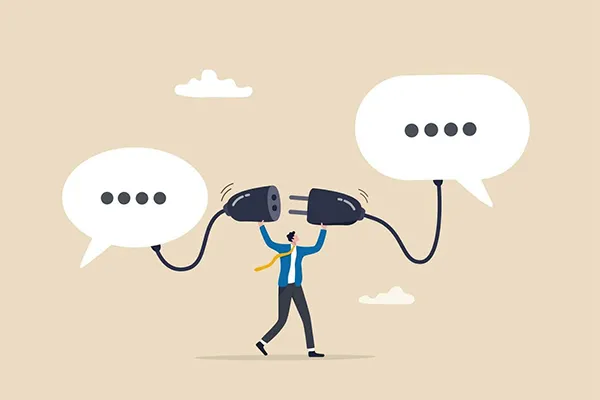
Why Agency-Client Communication Matters More Than Most Businesses Think
A lot of people think communication is the soft part of an agency relationship. They treat it like a nice extra, something that makes the process feel smoother but does not really change the outcome. In our experience, that is one of the fastest ways to create avoidable friction.
Communication is part of the work.
It shapes how fast decisions get made, how clearly priorities stay aligned, how quickly issues get caught, and how much unnecessary revision a project ends up carrying. PMI puts it plainly: for projects and programs to succeed, managers have to communicate deliberately, because without explicit effort, work can collapse through misunderstanding and error. Atlassian’s current guidance says the same thing in more operational terms. A communication plan gives the right information to the right people at the right time, reduces ambiguity, and keeps work aligned to the goal.
That is why we do not think of communication as a courtesy. We think of it as infrastructure.
Why communication matters so much in agency work
Agency work is full of moving parts. Strategy changes. Campaigns evolve. priorities shift. creative gets revised. data tells a new story. That is normal. The problem starts when those changes are not communicated clearly enough for everyone to understand what changed, why it changed, and what happens next.
That is usually where friction shows up.
A vague email can create the wrong assumption. A delayed update can slow a decision that affects the whole campaign. A missed nuance in a feedback thread can send a team toward the wrong revision. None of those issues feel dramatic on their own, but they add up quickly, especially when the business is trying to grow and every week matters.
This is one reason our positioning has shifted so deliberately toward clarity, direction, and systems. On our Why page, we explain that most businesses do not struggle because they lack effort. They struggle because growth becomes fragmented and too many decisions get made without a unifying strategy. Communication is one of the ways that fragmentation either gets worse or gets solved.
Good communication reduces rework
One of the biggest hidden costs in agency-client relationships is rework.
A team moves in one direction. The client expected something slightly different. The agency thought the priority had shifted. The feedback came in late or came in broad enough that everyone interpreted it differently. Now the work has to be revisited, not because the people involved are careless, but because the communication around the work was not specific enough to protect the outcome.
That is why we care less about saying more and more about saying the right things clearly.
Atlassian’s communication guidance makes that point well. It recommends defining objectives, audience, channels, roles, timeline, and feedback so communication supports the project instead of becoming another source of ambiguity. That kind of structure matters because it turns updates into tools for execution rather than noise around the work.
In practice, that means a good update should do more than inform. It should clarify what matters, what changed, what needs a decision, and what happens next.
Clear communication builds trust faster than polished language
The original post was right to focus on wording, but the bigger issue is trust.
Clients do not trust an agency because every sentence sounds polished. They trust an agency because the communication helps them understand where things stand, what the team is seeing, and what decisions need to be made. When updates are clear, specific, and honest, the relationship feels steadier. When communication is vague or overcomplicated, even good work starts feeling harder to trust.
We see that reflected directly in the feedback on our site. One client says the communication from our team on both the marketing and web development side has been phenomenal and appreciates how quickly everyone responds and takes care of things. Another says they love the weekly recap videos because they quickly break down where things stand and what needs to improve, making it easier to understand metrics and make educated decisions for future growth.
That matters because trust is not built only through results. It is also built through how understandable the process feels while those results are being worked on.
Better communication makes strategy easier to execute
A lot of businesses think strategy fails because the original idea was weak. Sometimes that is true. A lot of the time, the strategy was reasonable and the execution broke down because the communication around it was not strong enough.
This happens more often than people think.
A strategy can be sound on paper and still underperform if the team is unclear on the audience, the offer, the timeline, the priority, or the measurement standard. That is why strong communication is not separate from strategy. It is one of the mechanisms that keeps strategy alive after the kickoff call ends.
PMI’s communication research describes communication as essential for coordinating work and ensuring project success. Atlassian’s more recent guidance adds that better communication improves stakeholder engagement, decision-making, and alignment with strategic goals. That is exactly how we think about it. Clear communication protects the strategy from being diluted once real-world execution begins.
What good agency-client communication actually looks like
It usually looks simpler than people expect.
It means updates come with enough context to be useful. It means feedback is direct enough to act on. It means expectations are clear before the work begins, not halfway through a revision cycle. It means both sides know who owns which decisions and when those decisions need to happen. It means the communication cadence fits the complexity of the work instead of being left to chance.
That does not require endless meetings. It requires enough structure that important information does not keep slipping through the cracks.
This is also where our broader approach comes in. On our homepage, we talk about helping entrepreneurs and established brands install scalable systems and build more predictable revenue. We also make our free guide and training easy to access because clearer growth usually starts with clearer systems, and communication is one of those systems whether a business realizes it yet or not.
Why this matters to clients in practical terms
For a client, better communication does a few very practical things.
It shortens the distance between noticing a problem and solving it. It makes reports easier to understand. It reduces the need to revisit work that should have been clear the first time. It helps the client feel more confident in what the team is doing and why. Most importantly, it creates the kind of working relationship where strategy, execution, and feedback can move together instead of pulling against each other.
That is the real value.
Good communication is not there to make the relationship feel nicer. It is there to make the work more effective.
What to do next
If you are evaluating an agency relationship, pay attention to how the communication feels as much as the pitch. Does the team explain things clearly? Do updates make decisions easier? Does feedback lead to action? Do you leave conversations with more clarity than you had before?
Those questions usually tell you a lot.
If you want to see how we think about building businesses with more direction and less guesswork, start with our free guide and training. If you want a more direct conversation about where communication, strategy, or execution may be getting stuck in your current growth process,book a call with us
