
What Is PPC Marketing? How Pay-Per-Click Works and Why It Matters
A lot of business owners hear the term PPC and treat it like a technical marketing phrase they can circle back to later. The problem is that PPC usually shows up much earlier in the growth conversation than people expect. Once a business wants more control over traffic, more immediate feedback on demand, or a faster way to test an offer, pay-per-click advertising tends to become part of the discussion.
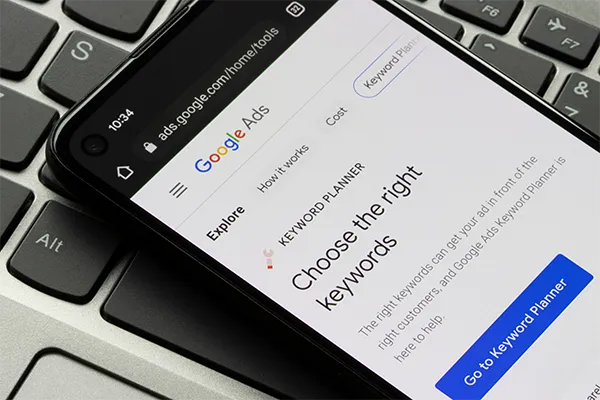
At a basic level, PPC marketing means you pay when someone clicks on your ad. Google’s own business guidance describes Search ads that way very clearly: your ads can appear when people search for businesses like yours on Google, and you only pay per click. That makes PPC different from channels where you spend time or money without always knowing how quickly the market will respond.
What PPC marketing actually is
PPC stands for pay-per-click marketing. In practical terms, it is a way to place your business in front of people who are searching, browsing, or returning to your site, then pay when they actively click through to learn more. Most people first encounter PPC through Google Ads, especially Search campaigns, because text ads can appear above and below Google search results when someone looks for something related to your business. Google’s documentation says those ads are tied to keywords and show in search results based on how the campaign is set up.
That is why PPC matters to business owners. It gives you a way to pay for attention that is tied to intent. Someone typing a search into Google is often much closer to a decision than someone casually scrolling a feed or stumbling across your site by chance. PPC does not guarantee a sale, but it does give you a clearer line between demand, messaging, and action than a lot of newer businesses have anywhere else in their marketing.
How PPC works in real life
The mechanics are simple enough. You choose a campaign type, set a goal, define your targeting, build your ads, and decide how much you are willing to spend. After that, Google runs auctions to determine whether your ad is eligible to show and where it can appear. Google explains that Ad Rank is part of what determines whether your ad can show and in what position, while ad quality and Quality Score help reflect how relevant and useful your ad and landing page are to the person searching. Google also notes that higher ad quality generally leads to better performance, including better ad positions and lower cost.
That matters because PPC is not just about bidding the most money. A business can spend aggressively and still get weak performance if the ad is poorly matched to the search, the landing page is weak, or the overall campaign strategy is sloppy. This is one reason we see business owners waste money when they treat PPC as a switch they can flip instead of a system they need to manage. The platform has structure behind it, and that structure rewards clarity more than raw motion.
The most common types of PPC ads businesses should know
Most businesses do not need to memorize every Google Ads option to understand PPC. They do need to know the main ways the channel shows up.
Search ads are the most straightforward place to start. They appear in search results and are driven by keywords tied to what people are actively looking for. Google’s Search ad guidance explains that ads can appear when someone searches for terms related to your business, and advertisers use keywords to connect the ad to relevant searches.
Display ads work differently. Instead of appearing only in search results, they can show across websites, apps, and video content on the Google Display Network. Google says Display campaigns are designed to help businesses promote themselves across websites and apps, with targeting options that help get the message in front of the right audience.
Remarketing is what allows a business to re-engage people who already visited its site or app. Google’s Tag Manager documentation describes remarketing as a way to add website and app visitors to remarketing lists so you can target those users with ads later. That matters because a lot of buyers do not convert on the first visit, especially when the decision takes thought.
Performance Max is Google’s broader goal-based campaign type. Google says it lets advertisers access all Google Ads inventory from a single campaign, including YouTube, Display, Search, Discover, Gmail, and Maps. That makes it different from older channel-specific setups because it is built to work across inventory based on the objective you set.
Why PPC matters to a business
The real value of PPC is not that it is fast, although it often is. The real value is that it gives the business a more direct way to test demand, put an offer in front of people with intent, and gather performance data quickly enough to make better decisions. Google’s campaign guidance reflects that practical reality. Search campaigns let businesses connect with people who are already looking, Display campaigns expand reach across websites and apps, and remarketing helps bring previous visitors back into the conversation.
This is why we do not treat PPC as a separate little channel that sits off to the side. For a lot of businesses, it becomes one of the clearest ways to learn whether the market responds to the message, whether the offer is landing, and whether the site is ready to convert the traffic it is being given. PPC does not replace strategy. It exposes whether the strategy is actually working once money starts flowing through it.
Where businesses usually get PPC wrong
A lot of businesses get into PPC thinking the main decision is budget. Budget matters, but it is rarely the first problem. The more common issue is that the business has not gotten clear enough on intent, messaging, or landing-page experience before it starts spending.
Google’s own ad quality documentation explains that ad quality is based on the experience users have when they see the ad and once they reach the landing page. That means weak campaigns are often weak because the system around the click is weak. The ad can show. The click can happen. The spend can be real. The result still falls apart if the message and the page do not carry their side of the work.
That is one reason PPC can feel expensive to people who are learning it by trial and error. The spend makes the gaps obvious faster. If the targeting is loose, the offer is unclear, or the site is underperforming, PPC does not hide that for very long.
How we think about PPC inside a growth system
We see PPC as one part of a broader system, not the whole answer by itself. Search intent, creative, landing page experience, follow-up, and reporting all matter. That is also why we built our free guide and training on the homepage around systems instead of isolated tactics. The Revenue Roadmap guide walks through how we think about growth, scale, and the pieces that have to work together for paid traffic to become useful instead of chaotic. The homepage and follow-up guide page both position that training around the exact roadmap we used to help a struggling online business scale more predictably.
For a client, that is the practical shift. PPC should not just bring clicks. It should help the business get clearer about what is working, where the friction is, and what deserves more attention.
What to do next
If you are new to PPC, the first step is not trying every campaign type at once. It is understanding what problem you want PPC to solve. Are you trying to capture active search demand, re-engage site visitors, widen reach, or test whether a new offer has traction? Once that is clear, the platform choices get easier.
If you want the bigger picture behind how we think about paid traffic, systems, and scale, start with our free guide and training on the homepage. If you want help looking at your current PPC setup and figuring out whether the channel is helping or quietly wasting budget, book a call with us. Our homepage frames that conversation around helping serious businesses grow with more predictable systems and clearer execution.
