
Why Growing Brands Hire an Ecommerce Marketing Agency Instead of Doing Everything In-House
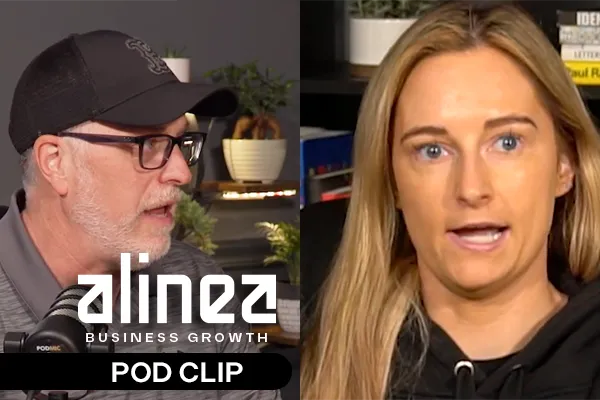
Watch The Pod Clip
A lot of e-commerce companies start with the same assumption. They believe marketing is something they can keep in-house until the business gets much bigger. That sounds reasonable at first because it feels more controlled, more cost-conscious, and more manageable than bringing in outside help. The problem is that marketing gets more demanding long before most businesses are ready for how much focus it actually takes.
That is usually the point where the conversation changes.
For some brands, keeping everything internal works well. If the company has enough capital, enough staff, and people with real experience in paid ads, Google PPC, email, and creative, then building that capability in-house can make sense. For a lot of ecommerce businesses, especially the ones in the growth stage, the issue is not whether the team can technically run campaigns. The issue is whether they can run them well enough, consistently enough, and efficiently enough for marketing to become a real growth system instead of a collection of tasks that never quite gets the attention it needs.
Why this decision matters more than people think
Marketing looks simpler from the outside than it feels once a business depends on it.
Founders often picture one or two channels, a few campaigns, and a manageable amount of work. What they run into instead is the depth of execution behind each part of the machine. Paid ads have to be structured properly. Creative has to stop the scroll. Targeting has to reach the right audience. Landing pages have to hold attention. Email has to follow through. Reporting has to tell the truth. When any one of those pieces gets weak, the whole system becomes less efficient.
That is part of why specialist support matters. Google Ads alone now involves multiple campaign types, Smart Bidding, conversion tracking, and increasingly automated systems like Performance Max, which Google describes as a goal-based campaign type that can access all Google Ads inventory from one campaign. Google also describes Smart Bidding as auction-time bidding that uses AI to optimize for conversions or conversion value. In other words, even one channel already asks for more technical and strategic attention than most owners expect when they first decide to handle it themselves.
What businesses usually underestimate
The biggest thing most ecommerce brands underestimate is not the difficulty of clicking buttons inside a platform. It is the amount of time it takes to make all the decisions around those buttons well.
That is the heart of the transcript.
When a business runs ads internally without enough experience, a good portion of the budget ends up paying for the learning curve. The team experiments in real time, tries to figure out what kind of hook will stop the scroll, what creative will carry attention, how campaigns should be structured, and who the right audience really is. That learning process has value, but it gets expensive when it happens inside live campaigns that are supposed to be driving revenue.
The time cost is just as real. Marketing takes a lot more hours than most people plan for, especially once the business expects it to support growth instead of just keep things moving. Even focusing on one area well can become a full discipline. Once paid ads, email, creative, and reporting all need attention at the same time, the work expands fast.
When keeping marketing in-house makes sense
We do not think every ecommerce brand should outsource marketing forever.
If a company is large enough to hire real specialists, support them properly, and give them enough room to do focused work, in-house can be a strong model. It can create close alignment, faster internal communication, and deeper product familiarity. For a well-resourced business with the right people in place, that can work very well.
The issue is that many ecommerce brands are somewhere in the middle. They have enough traction that the stakes are real, but they do not yet have the depth of team required to cover every moving part properly. That is where internal marketing starts to feel stretched. The same person is often expected to manage ads, review creative, think about email, watch reporting, and still handle everything else the business needs that week.
That is where efficiency usually starts to slip.
Why an ecommerce marketing agency often makes more sense in the growth stage
For a growing brand, hiring an ecommerce marketing agency often creates leverage faster than trying to build the full capability internally all at once.
The reason is straightforward. A trained team is already working inside the channels that drive growth. It already understands how to structure campaigns around sales instead of vanity metrics. It already knows how to think about targeting, creative, optimization, and the systems around those channels. Instead of paying for a long internal learning curve, the business gets access to pattern recognition and focused execution much sooner.
That matters most for businesses in the stage where every hire has to count. A company in the $1 million to $10 million range may not need a full internal department for paid acquisition, lifecycle email, creative testing, and reporting. It may just need the right people focused on the right functions so the business can move with more confidence and less wasted motion.
This is also where Alinea’s positioning fits naturally. The company’s live site frames its work around predictable sales growth, structured execution, and systems that help stuck businesses scale more clearly. That is the right lens for this decision, because most brands are not looking for more disconnected marketing activity. They are looking for a better system.
What a good agency is really helping with
A good agency is doing more than running campaigns.
It is helping the business make better decisions inside the channel. It is bringing experience into areas where most internal teams burn time trying to figure out the basics under pressure. It is helping the company avoid spending months learning lessons that an experienced team has already learned. It is also creating more consistency, which matters a lot when revenue depends on how well marketing is managed week after week.
That support can show up in paid social, Google PPC, email, or the way those areas work together. It can also show up in the internal structure the business needs to get past whatever is slowing growth down. Sometimes that means managing the campaigns directly. Sometimes it means helping build the system around them. Either way, the advantage comes from sharper execution and fewer decisions made in the dark.
Why the decision is really about efficiency
A lot of founders assume in-house is automatically the more efficient option because it feels closer to the business. Sometimes it is. A lot of the time, what the business actually needs is focused expertise, and that expertise is faster to access through a specialist partner than through a long hiring and training process.
That is what the transcript gets right.
The real comparison is not agency cost versus salary cost in isolation. The real comparison is how efficiently the business can get the work done, how much time it loses trying to figure things out, and how much budget gets wasted while the team is learning on live campaigns.
For some brands, the answer will still be in-house.
For a lot of others, the smarter move is bringing in outside help before the inefficiency becomes a bigger tax on the business than the partnership would have been.
You can see that same thinking in Alinea’s case study, where growth improved once the business had clearer systems, tighter execution, and more control over what was actually driving results.
How to tell which model fits your business
If we were looking at this decision with a brand owner, we would start with a few practical questions.
Does the business have someone who can give marketing real attention every week?
Does that person have enough depth in paid ads, Google PPC, email, and creative to improve those channels consistently?
Does the company have enough bandwidth to support the work around the campaigns, or is marketing getting squeezed between too many other priorities?
If the answers are strong, in-house may work well.
If the answers are mixed, or if the business keeps spending without getting clearer on what is actually working, that is usually when agency support starts to make more sense.
What to do next
If your e-commerce business is trying to decide whether marketing should stay internal, we would keep the question simple. Look at how much focused expertise the work really needs, how much internal capacity you actually have, and how expensive it has become to keep learning by trial and error.
If you want the broader thinking behind that approach, here’s why Alinea is built around clarity, structure, and scalable systems. If you want to see what that looks like in practice, the Alinea case study shows how stronger execution and a clearer system can change the trajectory of a business. And if you want help figuring out whether your current setup is helping or holding you back, book a call with our team.
